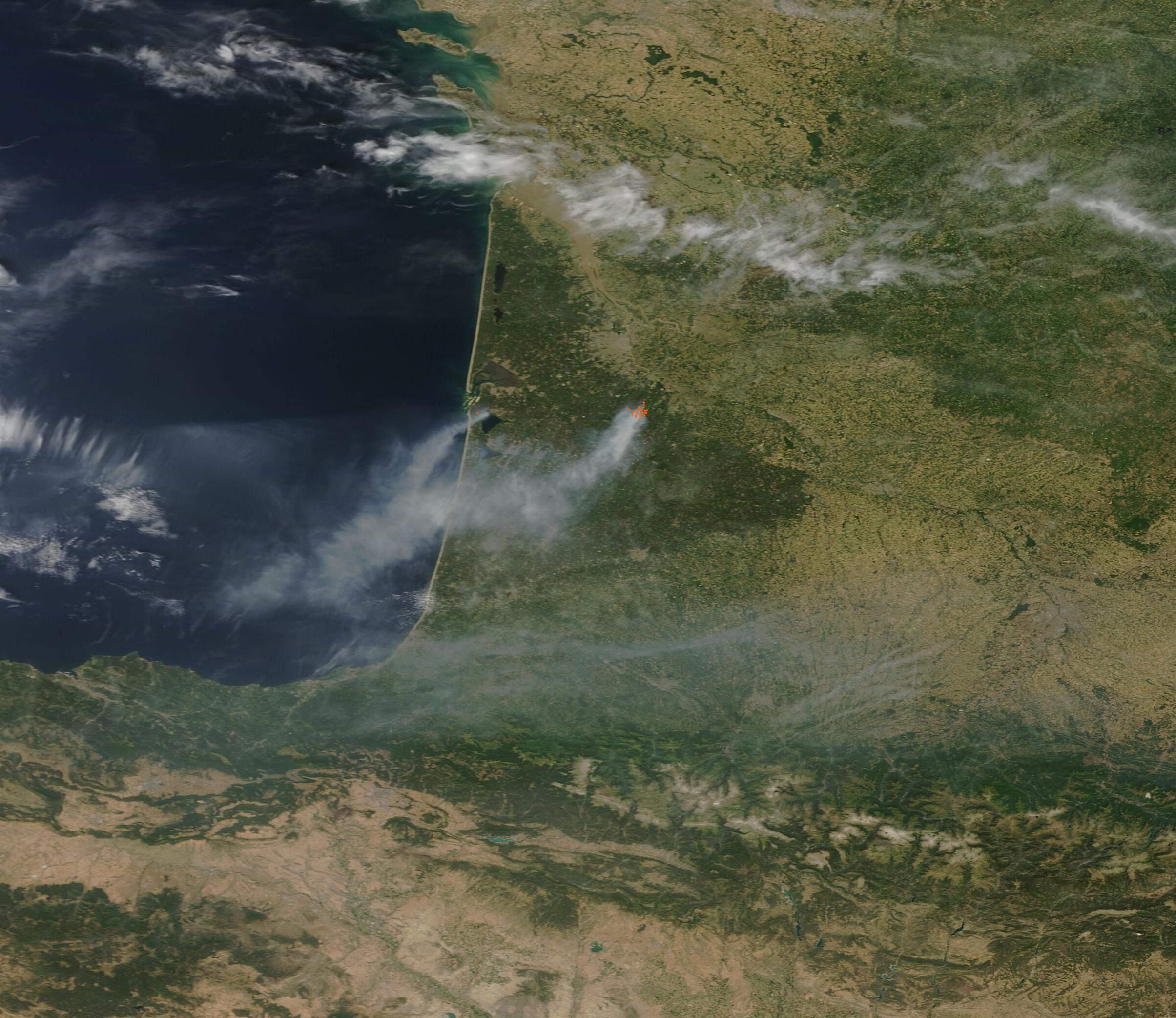
About 4,000 people must evacuate their homes near Bordeaux as wildfires continue to burn in southwest France [1].
The scale of the evacuations underscores a volatile fire season that has put French emergency services on high alert. These blazes threaten residential areas and critical infrastructure in the Gironde department, reflecting the increasing danger of extreme weather patterns in the region.
The fires have caused widespread anxiety among local residents and authorities. Officials said the current fire season is abnormal, noting that it has been aggravated by severe heat and drought conditions [2]. These environmental factors have created a landscape prone to rapid fire spread, making containment efforts difficult for firefighting crews.
While the situation remains tense, some reports indicated that the fire in Gironde reached a state of stability during the night between Sunday, July 26, and Monday, July 27 [2]. However, the need for mass evacuations persists as crews work to prevent further flare-ups in the densely wooded and residential corridors surrounding the city of Bordeaux.
The mobilization of resources has extended beyond local teams, as the abnormal nature of the season has required a coordinated effort across France and Europe [2]. The Gironde department remains the primary focus of these operations due to the risk posed to the population and the surrounding environment.
Emergency responders continue to monitor wind patterns and humidity levels to determine if further evacuations will be necessary. The ongoing instability of the terrain continues to challenge the efforts of the pompiers and rescue services tasked with securing the perimeter [2].
“Approximately 4,000 people must evacuate their homes near Bordeaux”
The recurring nature of these 'abnormal' fire seasons in southwest France indicates a systemic shift in regional climate vulnerability. By requiring European-level mobilization and mass evacuations of thousands, these events demonstrate that traditional local firefighting infrastructure may no longer be sufficient to handle the intensity of drought-driven blazes.


