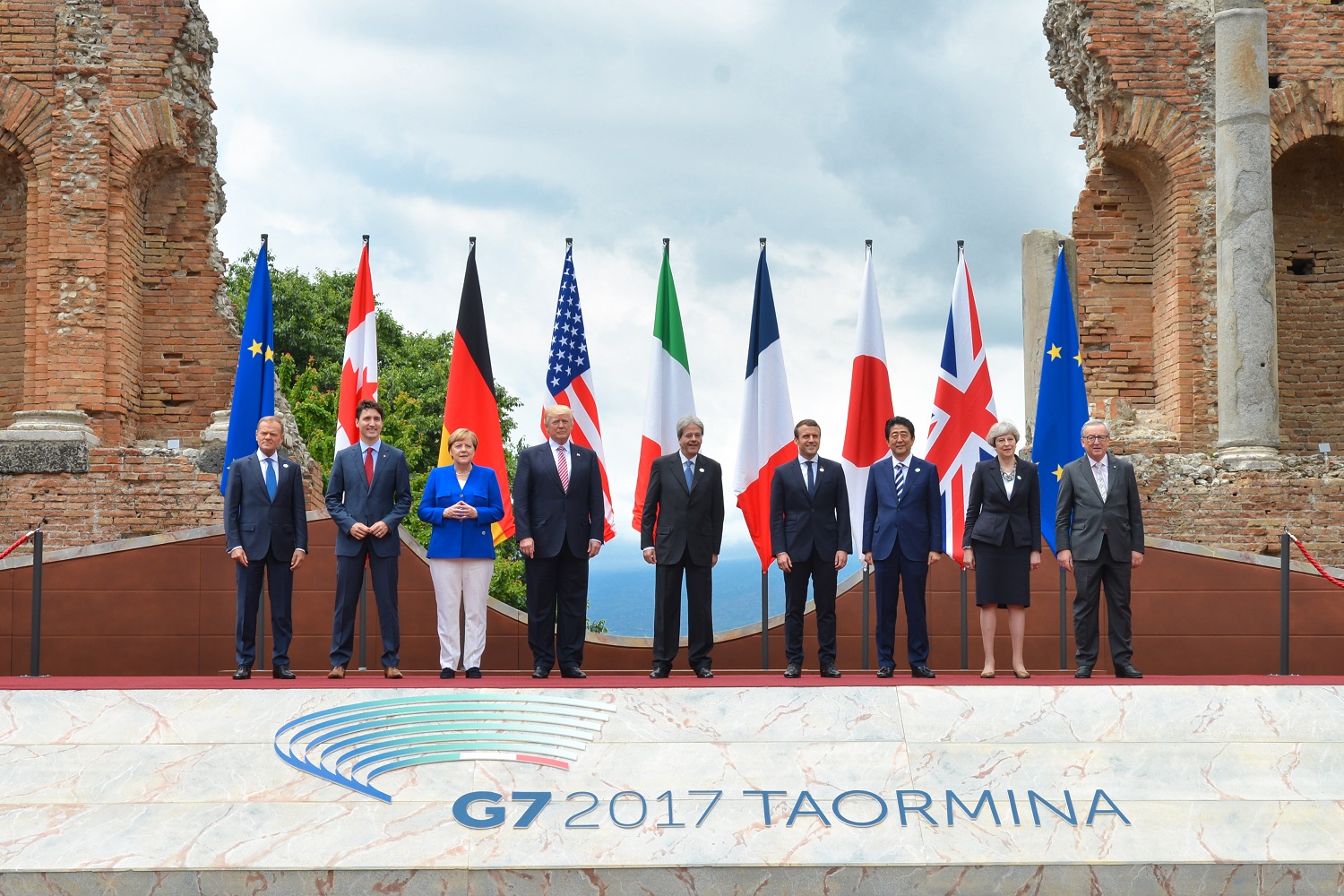
Prime Minister Narendra Modi joined world leaders for the official group photograph at the 52nd G7 summit in Évian-les-Bains, France, on Tuesday [1].
This appearance underscores India's continuing role as a key partner to the Group of Seven, despite not being a formal member of the bloc. The tradition of the "family photo" serves as a visual representation of diplomatic alignment, and international cooperation among the world's leading economies.
The gathering took place on June 16, 2026 [2] as part of the summit's broader agenda to foster dialogue on global stability. Modi interacted with other heads of state and government during the event, which was hosted in the French town of Évian-les-Bains [3].
According to reports, the prime minister said he thanked French President Emmanuel Macron for the welcome extended to the Indian delegation [4]. The 52nd edition of the summit [1] focused on strengthening ties between the G7 members and their invited partners to address shared geopolitical challenges.
While the group photograph is a symbolic gesture, it precedes high-level discussions and bilateral meetings. The presence of the Indian leader at the event highlights the strategic importance of the Indo-Pacific region in current G7 deliberations, a central theme for the meetings in France [4].
Modi's participation in the traditional photograph follows a pattern of India being invited to G7 summits to provide perspective on global south issues and security cooperation [4]. The event in Évian-les-Bains marks another instance of the G7 expanding its outreach beyond its core membership to include critical regional powers [5].
“Prime Minister Narendra Modi joined world leaders for the official group photograph”
India's consistent invitation to the G7 summit and its inclusion in the official group photography signals the bloc's recognition of New Delhi as an indispensable partner for global governance. By integrating India into these high-visibility diplomatic rituals, the G7 aims to bridge the gap between the traditional Western powers and the Global South, ensuring that strategic initiatives in trade and security have broader international legitimacy.