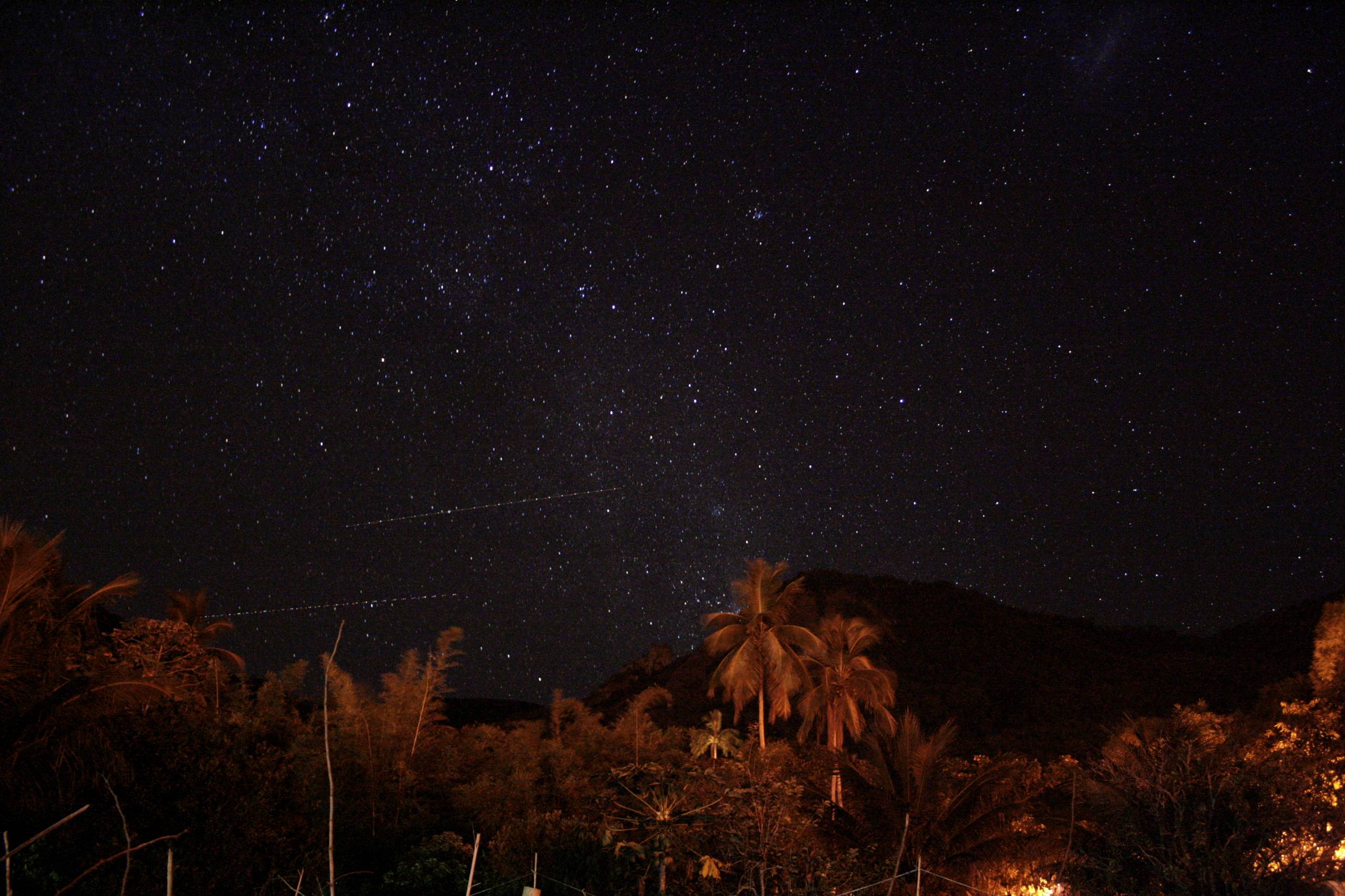
Six planets of the Solar System aligned in a rare celestial event on Feb. 28, 2026 [1].
These alignments are significant for observational astronomy because they bring distant celestial bodies into a narrow segment of the sky. This allows observers to see multiple planets simultaneously without the need for professional equipment.
The Feb. 28 event featured six planets: Mercury, Venus, Mars, Jupiter, Saturn, and Uranus [1], [2]. The orbital positions of these planets brought them into a narrow band of the sky, making them visible to the naked eye [2], [5]. The spectacle was most visible from Brazil, particularly in regions with a clear western horizon [3], [4].
"No fim de fevereiro, o céu vai oferecer um dos eventos mais interessantes da astronomia observacional: um chamado alinhamento planetário," the R7 editorial team said [6].
Other reports identified a separate alignment earlier this year. On the early morning of April 18, 2026, four planets appeared together in the same horizon strip [7]. This second event included a smaller group of planets than the February alignment [8].
"Na madrugada do dia 18 de abril de 2026, um alinhamento planetário reunirá quatro planetas do sistema solar em uma mesma faixa do horizonte," Catra Livre staff said [7].
Astronomers note that while these events appear as a straight line from Earth, they are actually a result of the planets' varying orbital paths coinciding from a specific terrestrial perspective [5]. The Super Abril editorial team said to imagine looking at the sky and seeing several planets aligned with the Sun [9].
Observers in Brazil were encouraged to look toward the western horizon after sunset during the February date to capture the full alignment [3], [4].
“Six planets of the Solar System aligned in a rare celestial event on Feb. 28, 2026.”
Planetary alignments are optical illusions caused by the alignment of planets relative to Earth's position in its orbit. While they have no physical effect on Earth, they provide critical opportunities for public engagement with science and allow amateur astronomers to track planetary movement and visibility patterns across the celestial sphere.


