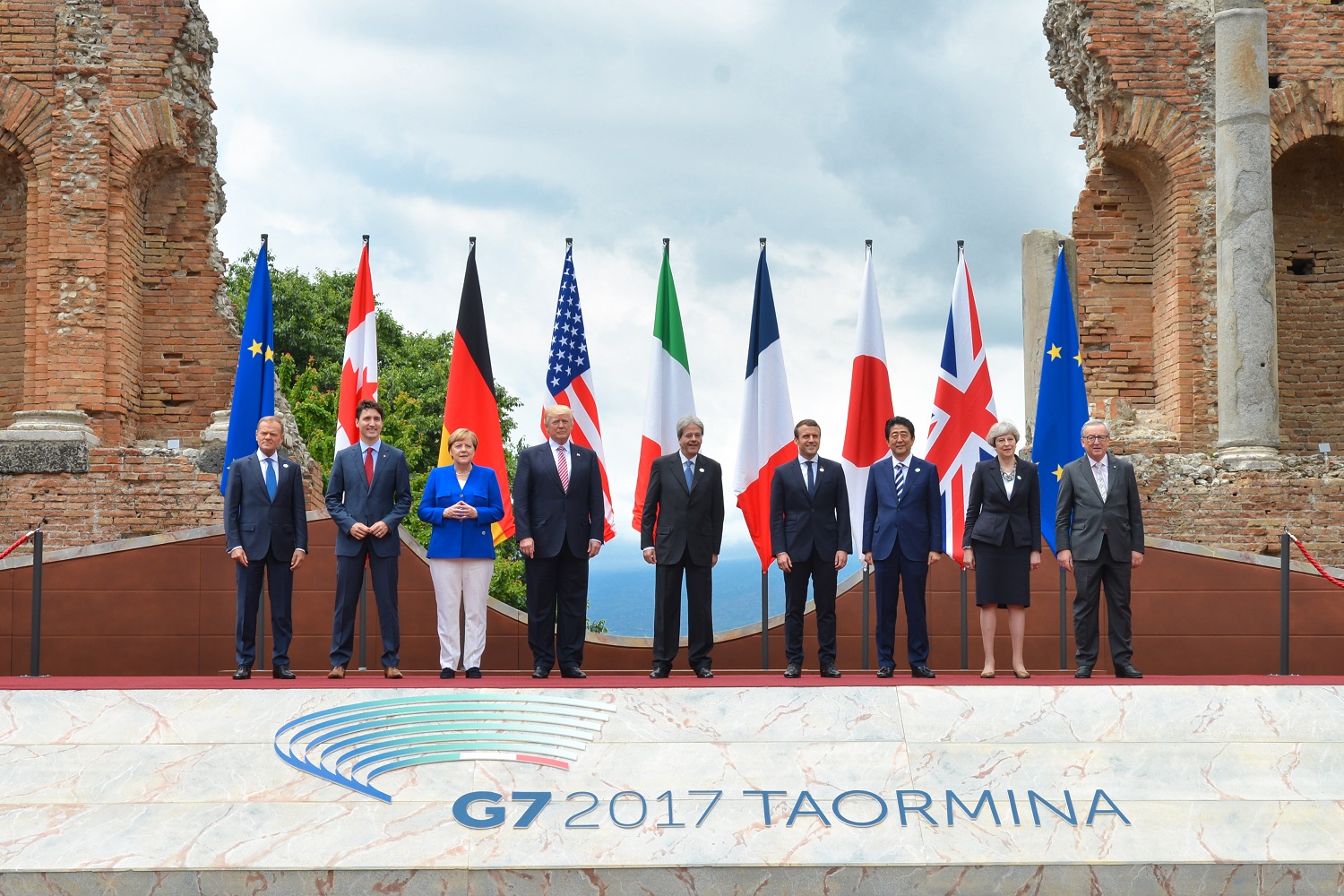
U.S. President Donald Trump has criticized European leaders as they prepare for the G7 summit in France beginning Monday [1].
The friction highlights a growing diplomatic divide over Middle East security and the willingness of Western allies to commit military resources to a conflict with Iran.
President Trump targeted the leaders of four nations: France, Germany, Italy, and the United Kingdom [2]. The U.S. president said he is dissatisfied that these allies have not joined his declared war against Iran in support of Israel [1].
The G7 summit is scheduled to take place from June 15 to 17, 2026 [3]. While the summit is intended to foster international cooperation, the current atmosphere is marked by heightened tension due to the disagreement over Iran.
Despite the public criticism of his allies, Trump indicated that diplomatic channels remain open. "I'm really close to a deal with Iran," Trump said [4].
This public pressure comes as the leaders gather in France, the host country for the 2026 summit [1, 3]. The disagreement centers on the U.S. administration's desire for a unified front in its military strategy against the Iranian government.
“"I'm really close to a deal with Iran."”
The tension between the U.S. and its core European allies suggests a shift in the G7's cohesion. By publicly criticizing the leaders of the UK, France, Germany, and Italy, the U.S. administration is leveraging diplomatic pressure to force a consensus on the Iran conflict, potentially prioritizing military alignment over traditional diplomatic protocols.


