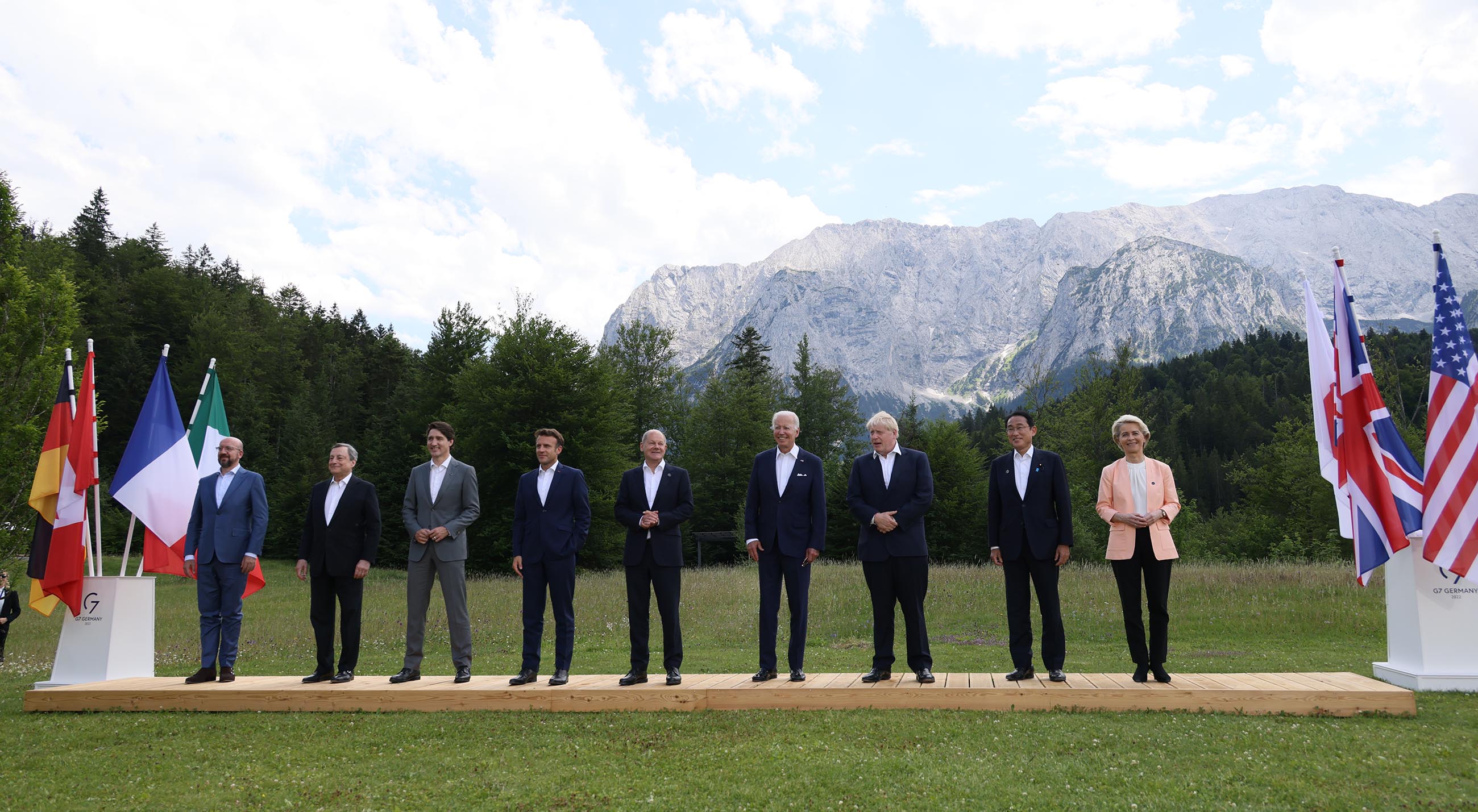
European Commission President Ursula von der Leyen said the EU will not lift or ease sanctions on Iran without concrete policy changes [1].
This stance maintains significant economic and political pressure on Tehran during a period of heightened regional tension. By tying the removal of sanctions to specific behavioral shifts, the EU signals that diplomatic concessions will not be granted without verified compliance regarding nuclear and regional policies [1, 2].
Von der Leyen said the statements Monday during the G7 summit hosted by France and held in Italy [2]. She said that the current restrictive measures are necessary tools for diplomacy. The European Union intends to keep these measures in place to ensure that any future agreements are backed by real actions, rather than promises [1].
"The principle of sanctions is that we need real changes," von der Leyen said [1].
Her comments suggest a coordinated approach among G7 nations to prevent Iran from bypassing international restrictions. The EU has indicated that the lack of required behavioral changes, specifically regarding nuclear proliferation and regional stability, leaves the bloc with no justification for easing the current regime [1, 2].
"EU sanctions will remain in place until Iran changes its behaviour," von der Leyen said [2].
The European Commission continues to monitor Iranian activities to determine if the necessary conditions for a policy shift have been met. Until such changes are documented, the EU will maintain its existing sanctions framework to discourage further escalation in the region [1, 2].
“"The principle of sanctions is that we need real changes."”
This statement reaffirms the European Union's commitment to a 'pressure-first' strategy. By explicitly linking sanctions relief to behavioral change, von der Leyen is closing the door on immediate diplomatic breakthroughs, signaling that the EU will prioritize long-term policy shifts over short-term stability.


