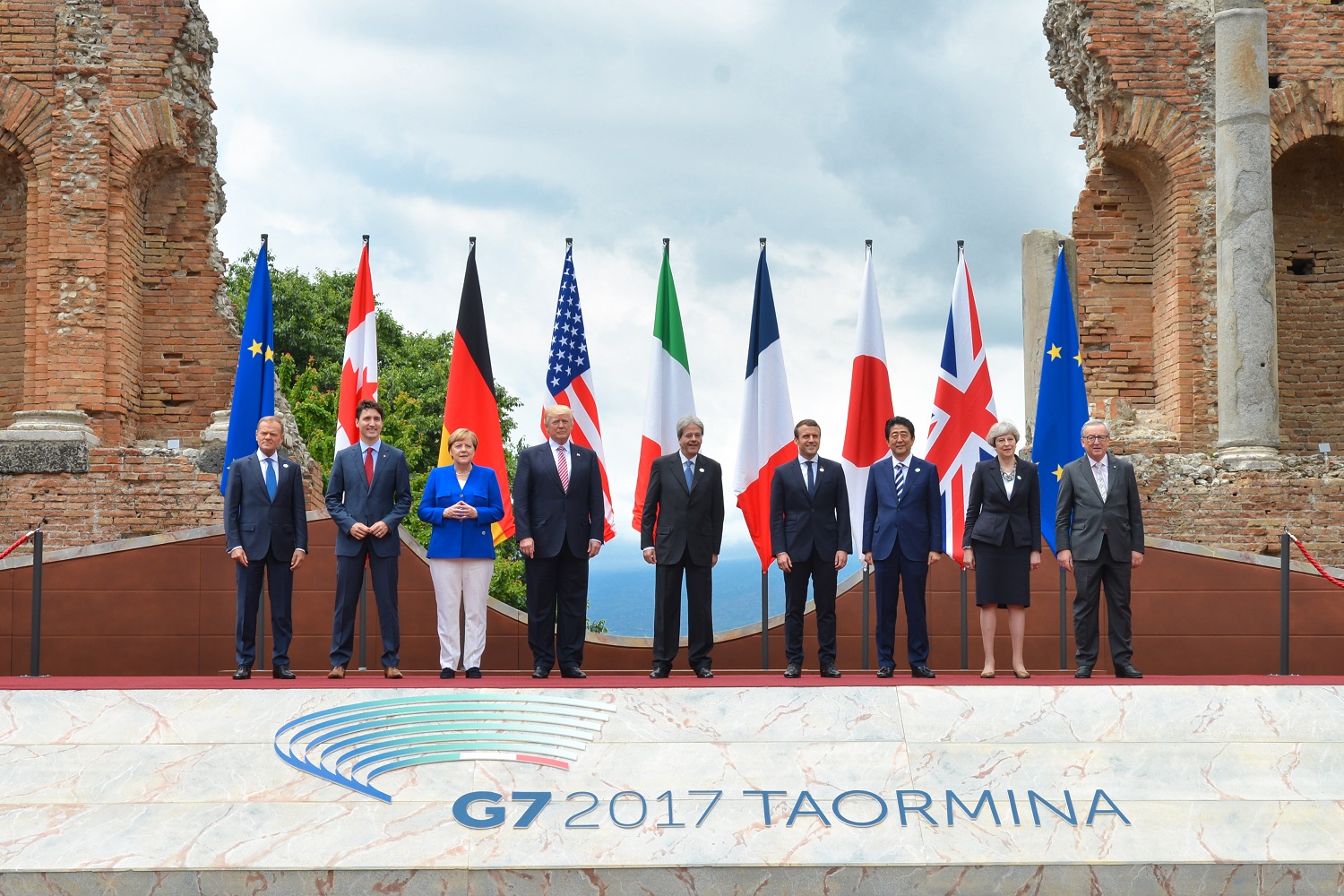
President Donald Trump departed the G7 summit on Monday, June 17, 2026 [1], and returned to the White House after signing a deal with Iran.
The early exit signals a significant shift in Middle East diplomacy, as the U.S. and Iran move to end hostilities amid escalating tensions between Iran and Israel.
According to reports, the two nations digitally signed a memorandum of understanding to end hostilities [2]. The agreement was reached as the U.S. sought to conclude discussions on the conflict and address the volatility surrounding Israel and Iran [3, 5].
There are conflicting reports regarding the location of the summit. Some sources place the meeting in the French Alps in France [1], while others report it took place in Kananaskis, Alberta, within the Canadian Rockies [4, 5].
Trump's departure followed the conclusion of the specific diplomatic goals he sought at the gathering. The move to return to Washington immediately after the signing suggests a priority on implementing the terms of the memorandum over the remaining G7 agenda [2, 3].
While some reports focus primarily on the dramatic nature of the exit, the digital signing of the memorandum marks a formal attempt to stabilize a region that has seen increasing friction between Tehran and Jerusalem [2, 5].
“President Donald Trump departed the G7 summit on Monday, June 17, 2026.”
The signing of a memorandum of understanding between the U.S. and Iran represents a tactical pivot toward de-escalation. By exiting the G7 early, the administration emphasizes the primacy of this bilateral agreement over the multilateral consensus of the G7, potentially prioritizing immediate regional stability in the Middle East over broader diplomatic coordination with other world leaders.