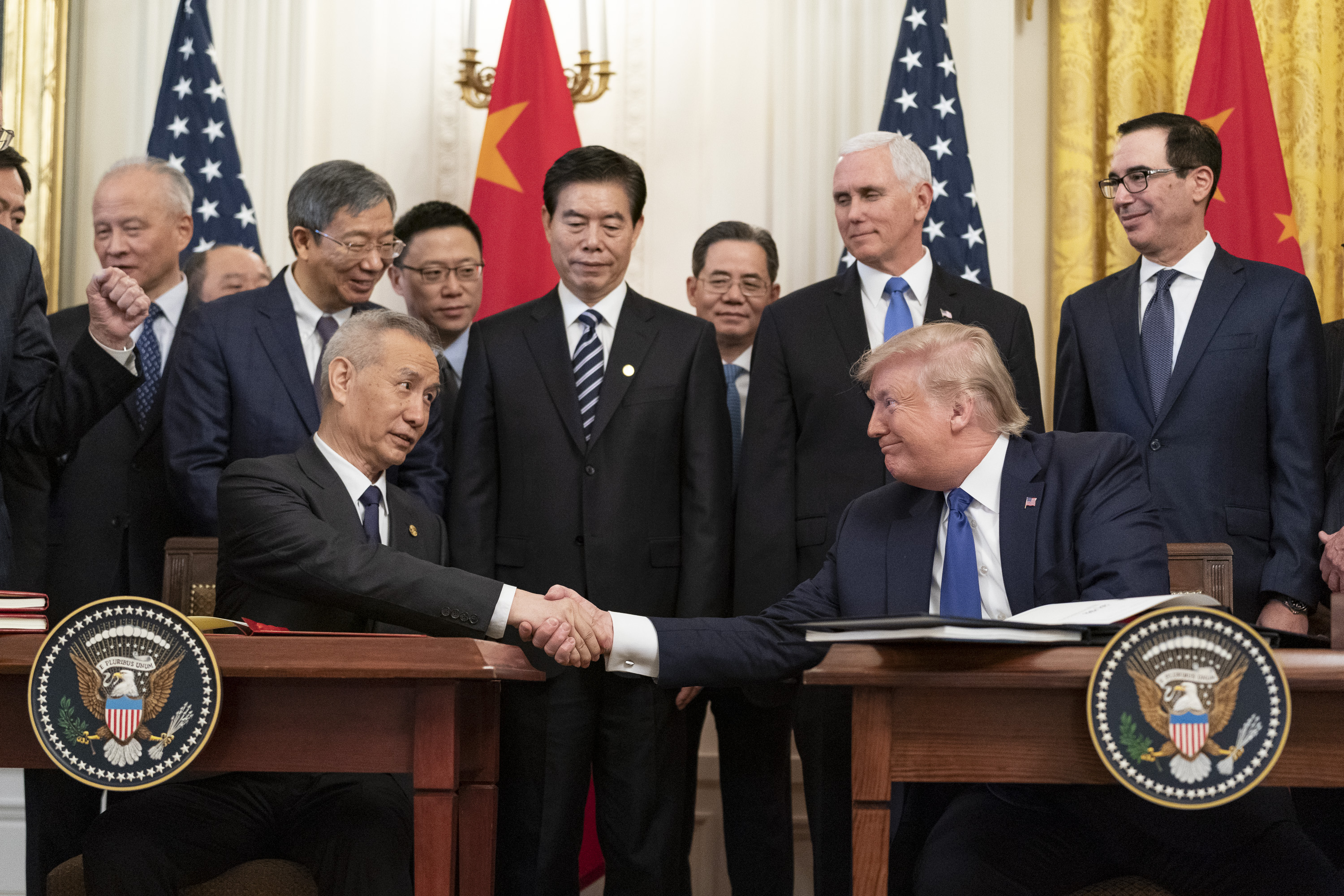
President Donald Trump announced Monday that a deal with Iran has been signed to end the U.S.–Iran war and reopen the Strait of Hormuz [1].
The agreement aims to stabilize one of the world's most critical maritime chokepoints and halt active military conflict between the two nations. This development follows a period of high tension that has severely impacted global oil markets and shipping logistics.
Speaking during a news conference at the G7 summit alongside French President Emmanuel Macron, Trump said the deal is all signed [3]. He said that the text of the agreement will be released shortly [2]. While the president described the deal as complete, some reports indicate the pact may hinge on an end to hostilities in Lebanon, and defer talks regarding the nuclear program of Tehran [1].
A central component of the agreement is the restoration of maritime traffic. Trump said the Strait of Hormuz will be completely reopened by Friday [3]. This timeline follows a formal signing slated for the Friday following June 15, 2026 [1].
There are conflicting reports regarding the current status of the waterway. While the U.S. president emphasized a total reopening, other reports suggest the Strait of Hormuz is currently only partially opened [3].
The announcement comes as a significant shift in U.S. foreign policy toward the region. The move to halt the war and secure the strait is intended to lower the risk of a wider regional conflict, and ease the economic pressure caused by shipping disruptions [1].
“"The deal is all signed."”
The reopening of the Strait of Hormuz is a critical move for global energy security, as the waterway is a primary artery for the world's oil supply. If the agreement holds and the formal signing occurs as scheduled, it could lead to a significant drop in oil prices and a reduction in military escalation in the Middle East. However, the reported deferment of nuclear talks and the potential dependency on Lebanese hostilities suggest that the long-term stability of the deal remains contingent on volatile regional factors.


