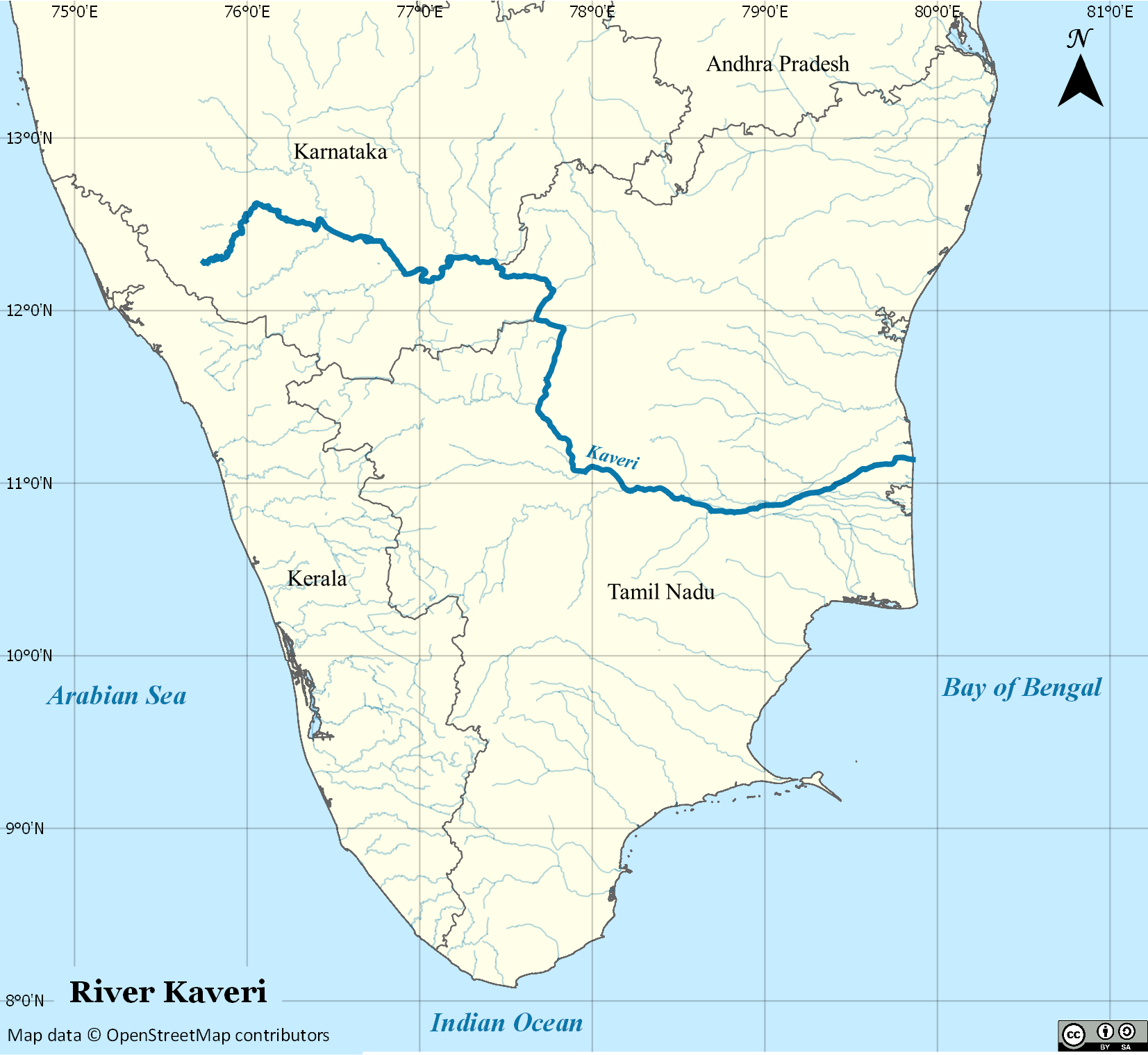
Tamil Nadu and Karnataka are in a renewed dispute over the sharing of Cauvery River water following a June 2024 meeting [1, 2].
The conflict threatens the agricultural stability of southern India, as both states rely on the river for irrigation and the livelihoods of millions of farmers.
Tamil Nadu has requested that Karnataka release its allotted share of approximately nine billion cubic feet (9 TMC) of water [1]. The state government said that Karnataka is failing to honor its legally mandated obligations to the downstream region.
Karnataka officials said the reduced water release is due to a delayed monsoon and lower reservoir storage levels compared to the previous year [2]. These conditions have limited the volume of water available for outflow into Tamil Nadu.
N. Anand, Tamil Nadu Water Resources Minister, said, "We will not compromise on our rights to Cauvery water or the livelihoods of our farmers" [2].
The tension extends beyond immediate water releases to long-term infrastructure projects. Chief Minister C. Joseph Vijay said he urged the Prime Minister to direct the Union Jal Shakti Ministry to reject Karnataka’s draft detailed project report for the Mekedatu project [3].
Analysts said that a weak monsoon forecast could exacerbate the already tense relationship between the two states [2]. While some reports focus on weather conditions, other accounts indicate that the Mekedatu dam project is a primary driver of the current political friction [3].
“"We will not compromise on our rights to Cauvery water or the livelihoods of our farmers."”
The recurring nature of the Cauvery dispute highlights the volatility of water security in India when legal mandates clash with environmental realities. The intersection of a weak monsoon and the proposed Mekedatu project creates a dual crisis of immediate resource scarcity and long-term geopolitical mistrust between Karnataka and Tamil Nadu.


