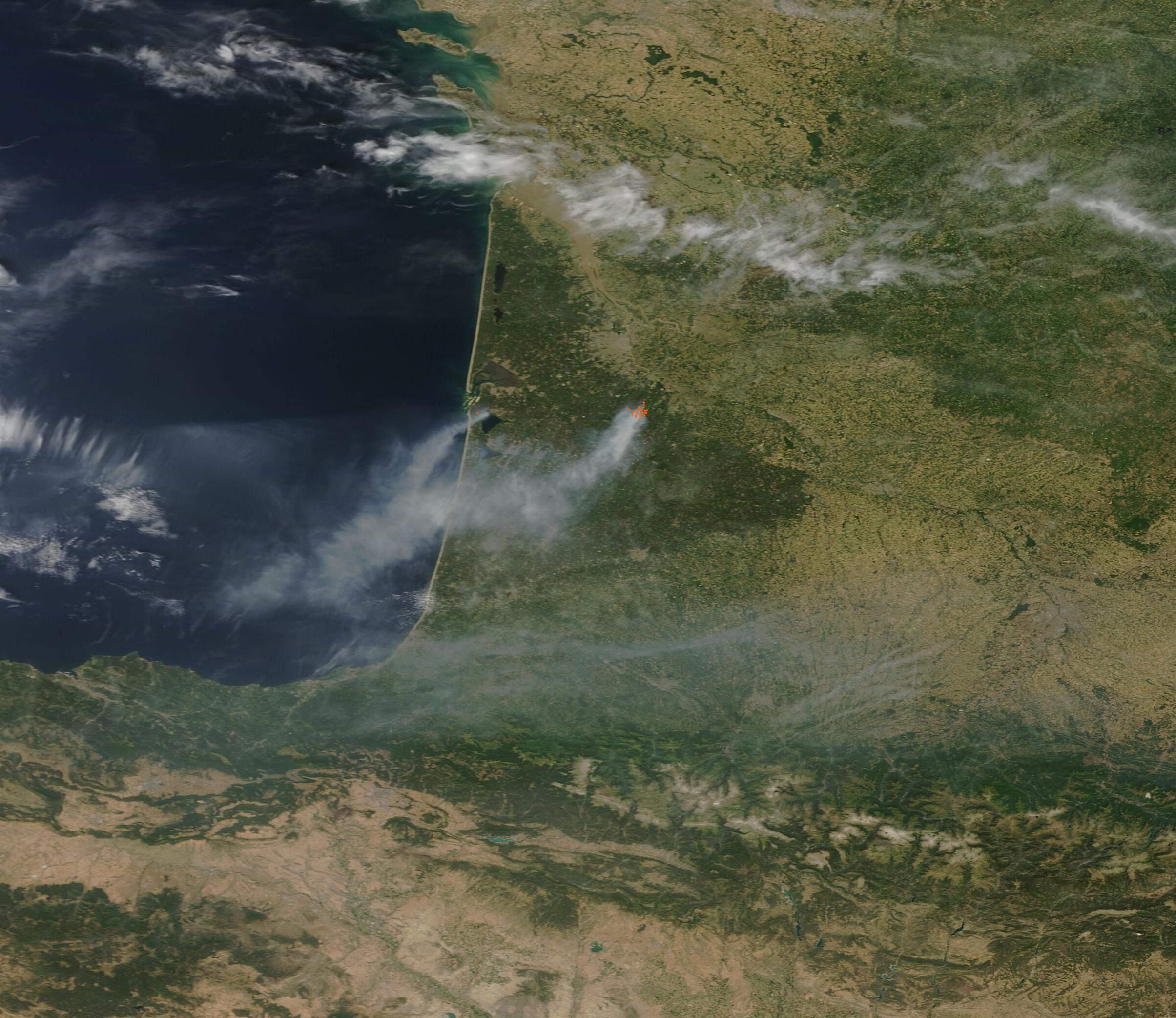
Firefighters in southwestern France are battling a massive forest fire that has destroyed 240 homes [2].
The scale of the disaster threatens not only residential areas but also critical industrial infrastructure. Because the flames are moving toward high-risk sites classified as Seveso, the situation poses a potential environmental and safety crisis for the region near Bordeaux.
The fire has burned approximately 42,000 hectares [1]. Impacted areas include the villages of Blagon and Le Porge, where the landscape has been severely altered by the blaze. In some sectors, flames have been reported as close as 15 kilometres from the center of Le Porge [4].
Emergency crews are focusing on preventing further loss of property and protecting industrial facilities operated by companies including ArianeGroup, Thales, Dassault, and Safran. These sites are subject to strict safety regulations due to the nature of their operations.
Reports on the current status of the fire vary. Some officials said the fire is stabilized and the effort has transitioned into a long-term operation. However, other reports indicate the fire is not yet mastered, as active flames continue to move through the brush.
Despite the stabilization in certain sectors, the recovery will be slow. Firefighters said it will take several months to fully extinguish the fire [3]. The long-term nature of the operation is due to the vast area of burned land and the risk of reignition in the dry terrain.
The Gironde department continues to coordinate resources to manage the perimeter and ensure that the industrial zones remain secure from the advancing fire line.
“The fire has burned approximately 42,000 hectares.”
The intersection of massive wildfires and 'Seveso' classified industrial sites creates a high-stakes emergency. These sites store hazardous materials that could cause catastrophic secondary disasters if ignited, meaning the priority has shifted from simple property preservation to preventing a large-scale industrial accident.