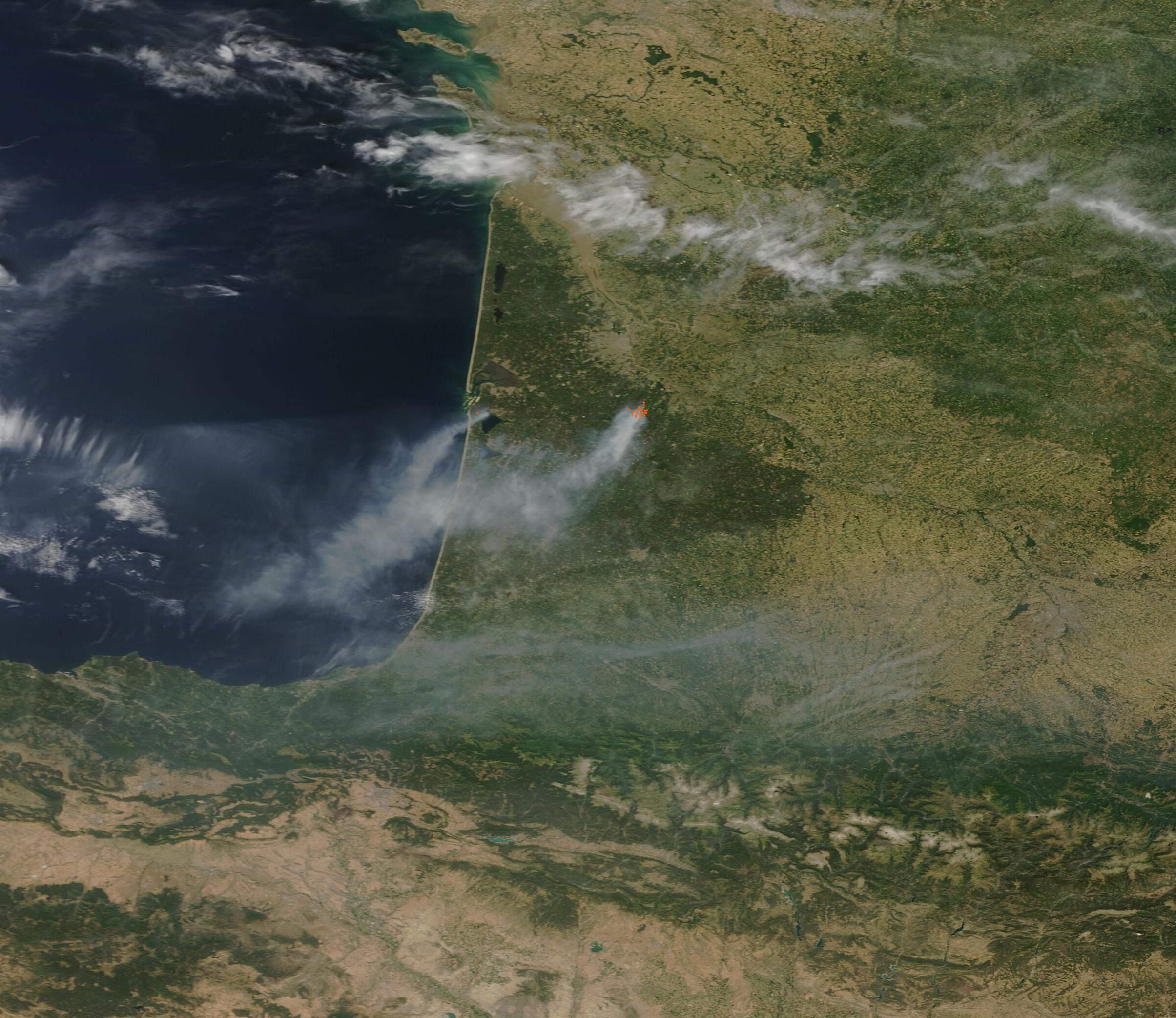
Wildfires in southwestern France have moved close to missile and rocket factories that store explosive materials in the Gironde region.
The proximity of these fires to defense infrastructure creates a significant risk of secondary explosions, which could complicate firefighting efforts and endanger nearby populations.
Emergency services and French authorities are monitoring the situation as the blazes sweep through the region near Bordeaux. The fires have reached the Lacanau surfing hotspot, further expanding the area of impact. Officials said that at least seven sites holding hazardous substances are located within 12 miles of the current blaze [1].
These fires are part of a larger environmental crisis driven by a severe heatwave and prolonged dry conditions. The current disaster is described as the worst blaze on record for France, with wildfires scorching over 104,000 acres [2].
The threat extends beyond defense plants, as the fires have also put nuclear sites at risk. The combination of extreme heat and dry vegetation has allowed the flames to spread rapidly across the landscape, making containment difficult for ground crews.
Authorities continue to coordinate evacuation and containment strategies to protect the industrial sites and residential areas. The risk remains high as the region faces the possibility of further heatwaves.
“Wildfires have scorched over 104,000 acres in France's worst blaze on record”
The intersection of extreme weather and critical military infrastructure highlights a growing vulnerability in national security. When wildfires threaten sites storing explosives or nuclear materials, the priority shifts from land containment to preventing catastrophic industrial accidents, potentially forcing the evacuation of larger civilian zones.


