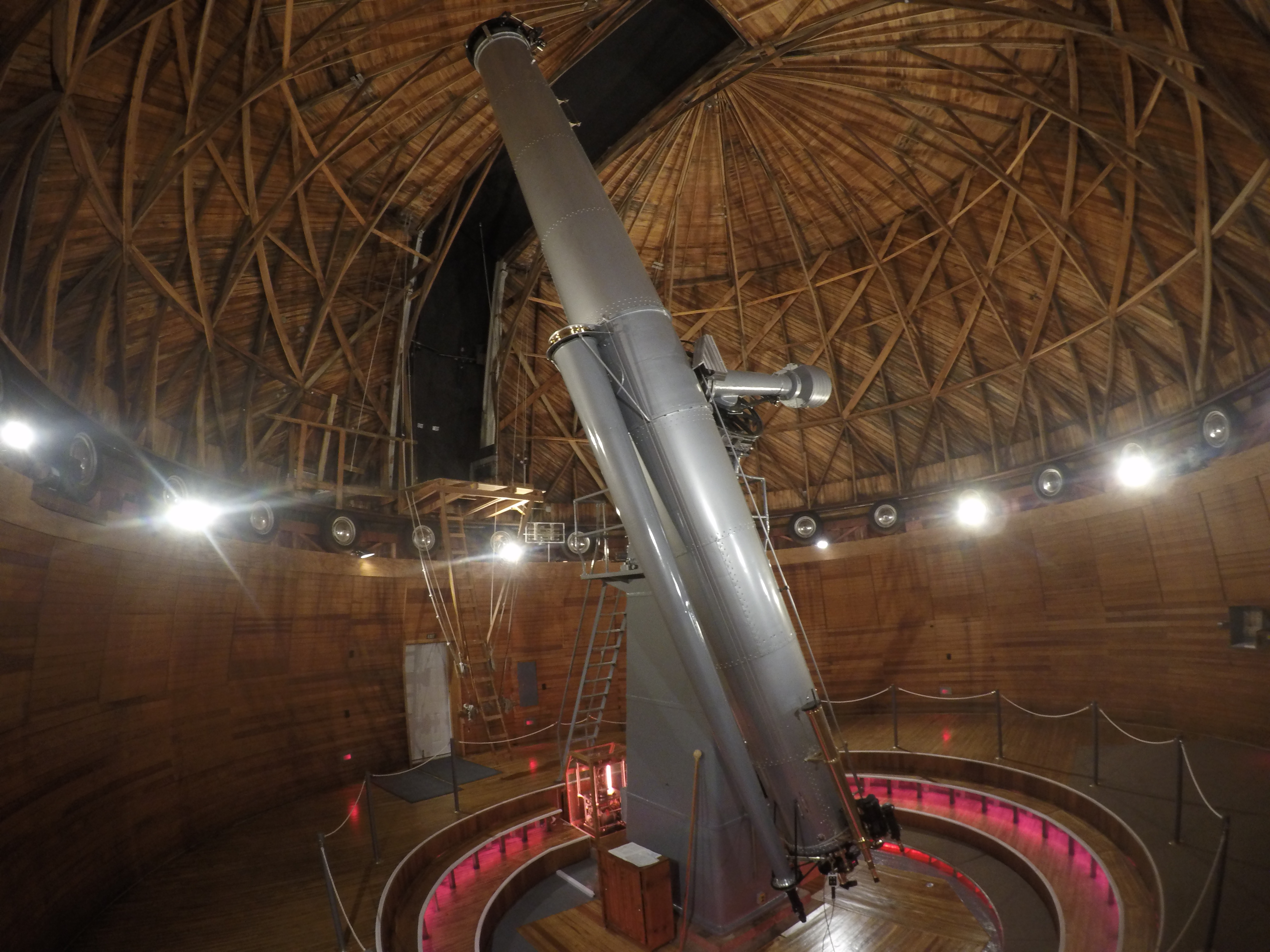
Lowell Observatory in Flagstaff, Arizona, is highlighting its long history of significant astronomical breakthroughs and scientific contributions [1].
These milestones underscore the institution's role in shaping modern understanding of the cosmos and its enduring status as a global scientific landmark.
Located on Mars Hill above Flagstaff, the observatory has operated for 130 years [1]. Kevin Schindler, the official historian for the observatory, said the facility is important and the discoveries defined its legacy [2, 3].
One of the most pivotal moments in the observatory's history occurred in 1912, when researchers helped discover that the universe was expanding [1]. This finding challenged previous astronomical models and altered the scientific community's perception of space.
Lowell astronomers also played a central role in the discovery of Pluto in 1930 [1]. The identification of the distant body expanded the known boundaries of the solar system and remains one of the most famous achievements associated with the site.
Beyond these specific events, the observatory is recognized for its deep ties to the scientific history of Flagstaff and its proximity to Route 66 [1]. The facility continues to serve as a hub for both professional research and public education, maintaining the legacy established over a century ago.
“The observatory has operated for 130 years.”
The continued prominence of Lowell Observatory demonstrates how historical sites of discovery maintain relevance by bridging the gap between early 20th-century astronomy and modern astrophysics. By emphasizing discoveries like the expanding universe and Pluto, the institution preserves the narrative of U.S. leadership in space exploration during the formative years of the field.


