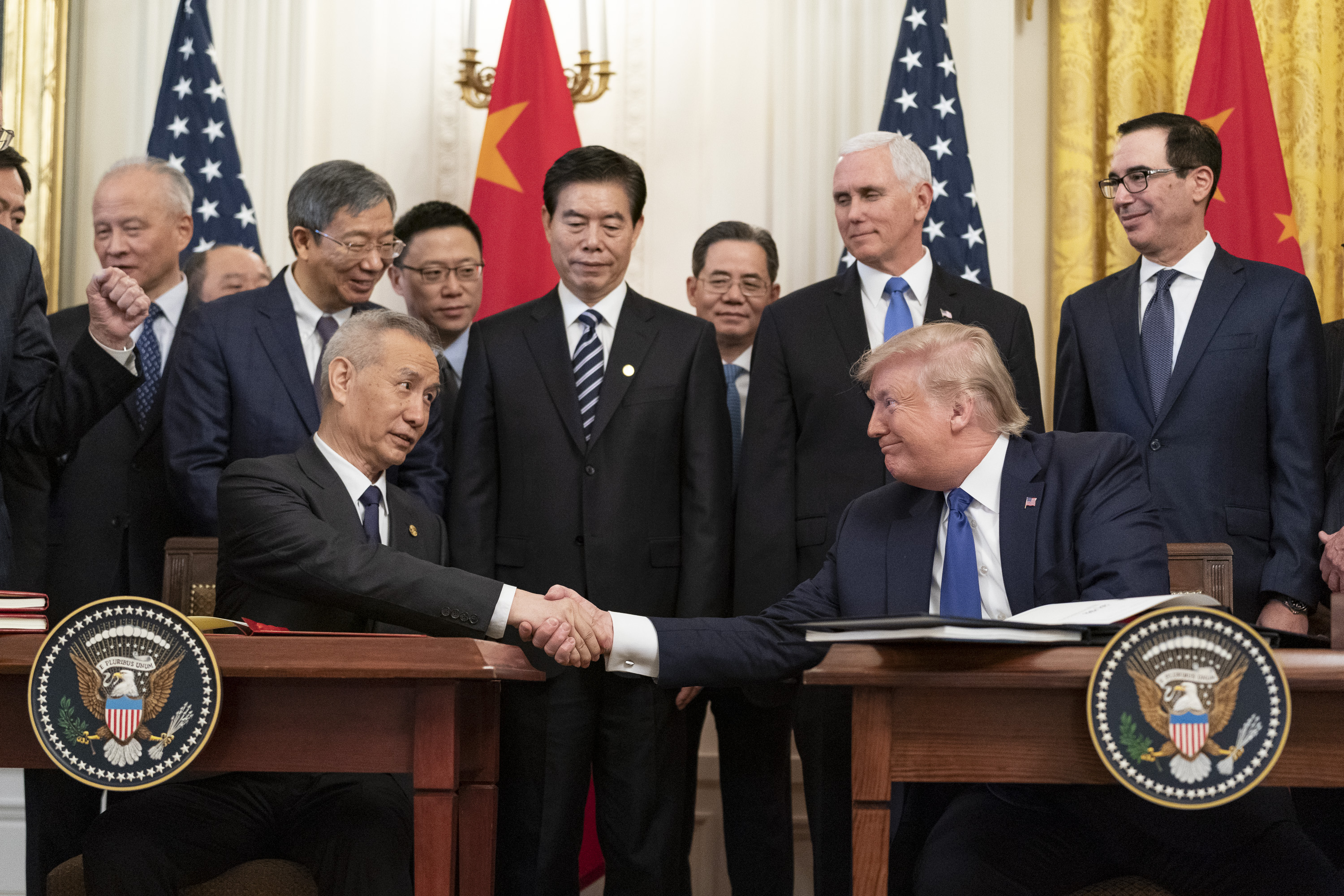
President Donald Trump and Iranian President Masoud Pezeshkian signed a memorandum of understanding to end hostilities and reopen the Strait of Hormuz.
The agreement marks a significant shift in regional diplomacy aimed at reducing tensions between the U.S. and Iran. By addressing the closure of the Strait of Hormuz, the deal seeks to stabilize global shipping lanes and mitigate the risk of further escalation in the Middle East.
Trump attended the G7 summit in the French Alps, where the diplomatic breakthrough occurred. While reports on the signing method vary, some sources said the memorandum was electronically signed on Sunday, June 17, 2026 [1]. The agreement specifically stipulates that the Strait of Hormuz will open on Friday, June 21, 2026 [2].
The memorandum focuses on ending the conflict between the United States and Iran. The president said the deal was a priority during his time at the G7 summit in France before he departed for the United States.
Following the conclusion of the summit and the announcement of the deal, Trump returned to Joint Base Andrews in Maryland on Monday, June 18, 2026. The return follows a period of intense negotiation and high-level meetings with other G7 leaders, including French President Emmanuel Macron.
The deal aims to resolve long-standing conflicts and reopen critical maritime routes to ensure the flow of international trade. The transition from hostilities to a memorandum of understanding represents a formal attempt to stabilize the region through direct executive agreement.
“President Donald Trump and Iranian President Masoud Pezeshkian signed a memorandum of understanding to end hostilities.”
The reopening of the Strait of Hormuz is a critical economic lever, as a significant portion of the world's petroleum passes through this narrow waterway. By securing an agreement to end hostilities, the U.S. is attempting to prevent a wider regional war and lower global energy price volatility, though the stability of the deal will likely depend on the sustained cooperation of both the U.S. and Iranian administrations.


