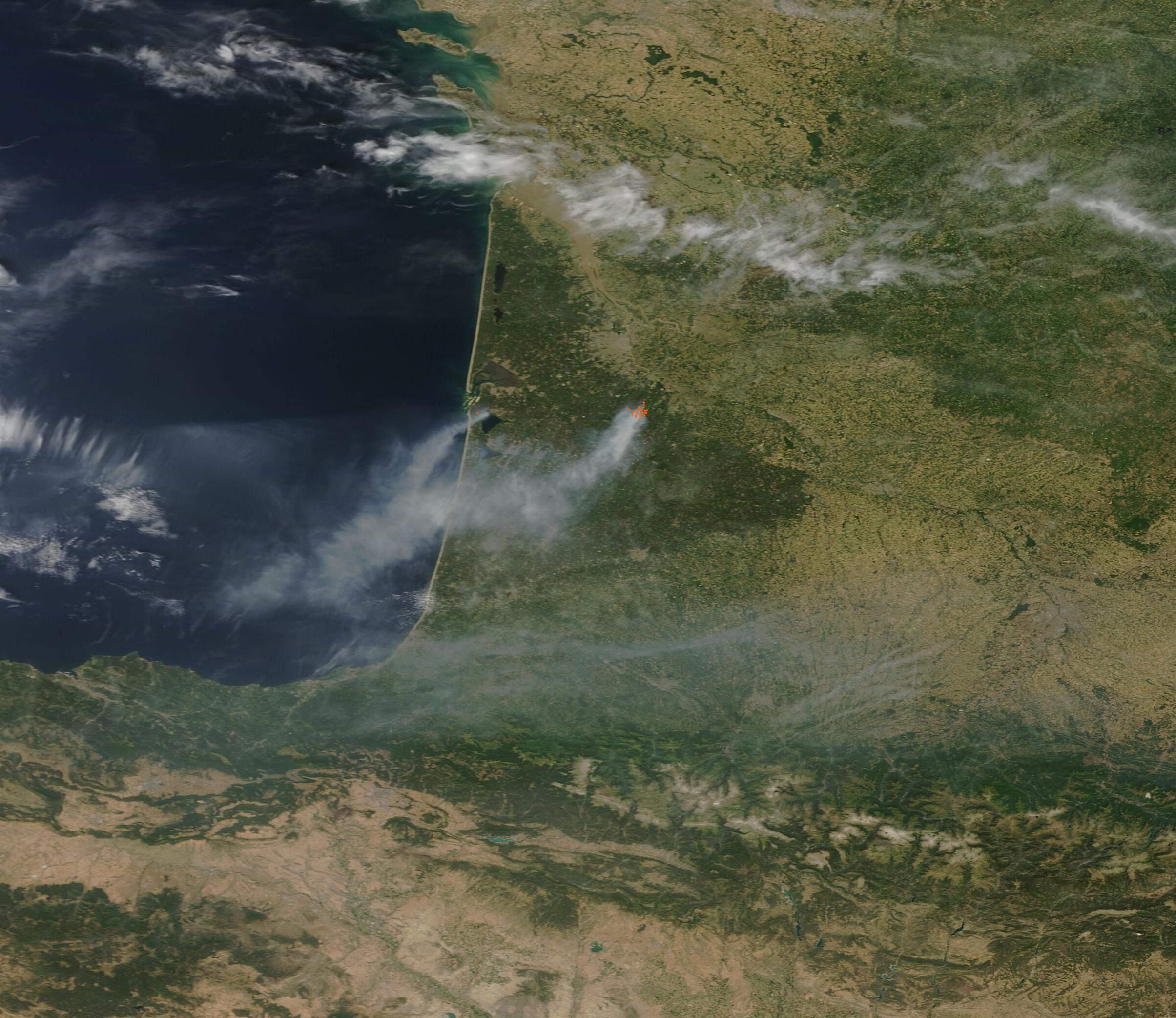
Massive wildfires in southwest France forced more than 200,000 people to flee their homes on Saturday, July 25 [2].
The scale of the displacement highlights the growing vulnerability of the region to extreme weather, as rapid fire spread threatens both residential areas and critical ecological zones.
The crisis centered on the Gironde department near Bordeaux and the Arcachón Bay area [1]. In the Gironde department alone, the uncontrolled advance of the flames forced the evacuation of 167,000 people [4], while other reports indicate up to 260,000 people were displaced across France [1].
Emergency conditions were fueled by a combination of extreme heat, dry soil, and strong winds. These factors allowed the fires to spread rapidly across the landscape, creating what officials described as an emergency without precedent [3].
The disaster extended beyond French borders, with Spain also battling significant blazes. Combined efforts in both countries have seen a total of 285,000 people affected by the fires [5]. The environmental toll is equally severe, with 113,000 hectares of forest burned across the two nations [3].
"The southwest of France became the most dramatic point of the crisis after the uncontrolled advance of the fire in the bay of Arcachón," MVS Noticias said [4].
Local authorities continued to manage the displacement as the fires moved through the region. The high number of evacuees has put significant pressure on temporary shelters and emergency services in the Bordeaux outskirts. The volatility of the weather continues to challenge containment efforts as crews work to prevent further loss of forest and property.
“More than 200,000 people were forced to leave their homes because of massive wildfires.”
The simultaneous occurrence of record-breaking fires in France and Spain suggests a regional climate pattern where extreme heat and soil dehydration are creating a 'tinderbox' effect. The unprecedented number of evacuations in the Gironde department indicates that traditional containment strategies may be insufficient against the speed of modern wildfire behavior, necessitating a shift toward larger-scale preemptive evacuations to prevent mass casualties.

'%2F%3E%0A%20%20%20%20%3Crect%20width%3D'1600'%20height%3D'900'%20fill%3D'url(%23v)'%2F%3E%0A%20%20%20%20%3Cg%20opacity%3D'0.08'%20fill%3D'%23ffffff'%3E%0A%20%20%20%20%20%20%3Ccircle%20cx%3D'1420'%20cy%3D'180'%20r%3D'220'%2F%3E%0A%20%20%20%20%20%20%3Ccircle%20cx%3D'1500'%20cy%3D'760'%20r%3D'120'%2F%3E%0A%20%20%20%20%3C%2Fg%3E%0A%20%20%20%20%3Cline%20x1%3D'80'%20y1%3D'172'%20x2%3D'220'%20y2%3D'172'%20stroke%3D'%23ffffff'%20stroke-width%3D'3'%20stroke-opacity%3D'0.6'%2F%3E%0A%20%20%20%20%3Ctext%20x%3D'80'%20y%3D'140'%20font-family%3D'Inter%2C%20-apple-system%2C%20Helvetica%2C%20sans-serif'%20font-weight%3D'700'%20font-size%3D'28'%20fill%3D'%23ffffff'%20letter-spacing%3D'6'%3EHANNA%20%C2%B7%20NEWS%3C%2Ftext%3E%0A%20%20%20%20%3Ctext%20x%3D'80'%20y%3D'230'%20font-family%3D'Inter%2C%20-apple-system%2C%20Helvetica%2C%20sans-serif'%20font-weight%3D'600'%20font-size%3D'40'%20fill%3D'%23ffffffb3'%20letter-spacing%3D'4'%3EWORLD%3C%2Ftext%3E%0A%20%20%20%20%3Ctext%20x%3D'80'%20y%3D'622'%20font-family%3D'Playfair%20Display%2C%20Georgia%2C%20serif'%20font-weight%3D'800'%20font-size%3D'86'%20fill%3D'%23ffffff'%20letter-spacing%3D'-1'%3EUS%20and%20Saudi%20Forces%20Strike%3C%2Ftext%3E%3Ctext%20x%3D'80'%20y%3D'721'%20font-family%3D'Playfair%20Display%2C%20Georgia%2C%20serif'%20font-weight%3D'800'%20font-size%3D'86'%20fill%3D'%23ffffff'%20letter-spacing%3D'-1'%3EIranian-Backed%20Militias%20in%3C%2Ftext%3E%3Ctext%20x%3D'80'%20y%3D'820'%20font-family%3D'Playfair%20Display%2C%20Georgia%2C%20serif'%20font-weight%3D'800'%20font-size%3D'86'%20fill%3D'%23ffffff'%20letter-spacing%3D'-1'%3EIraq%3C%2Ftext%3E%0A%20%20%20%20%3Ctext%20x%3D'80'%20y%3D'870'%20font-family%3D'Inter%2C%20-apple-system%2C%20Helvetica%2C%20sans-serif'%20font-weight%3D'500'%20font-size%3D'22'%20fill%3D'%23ffffff66'%20letter-spacing%3D'2'%3Enews.hanna-ai.com%3C%2Ftext%3E%0A%20%20%3C%2Fsvg%3E)
