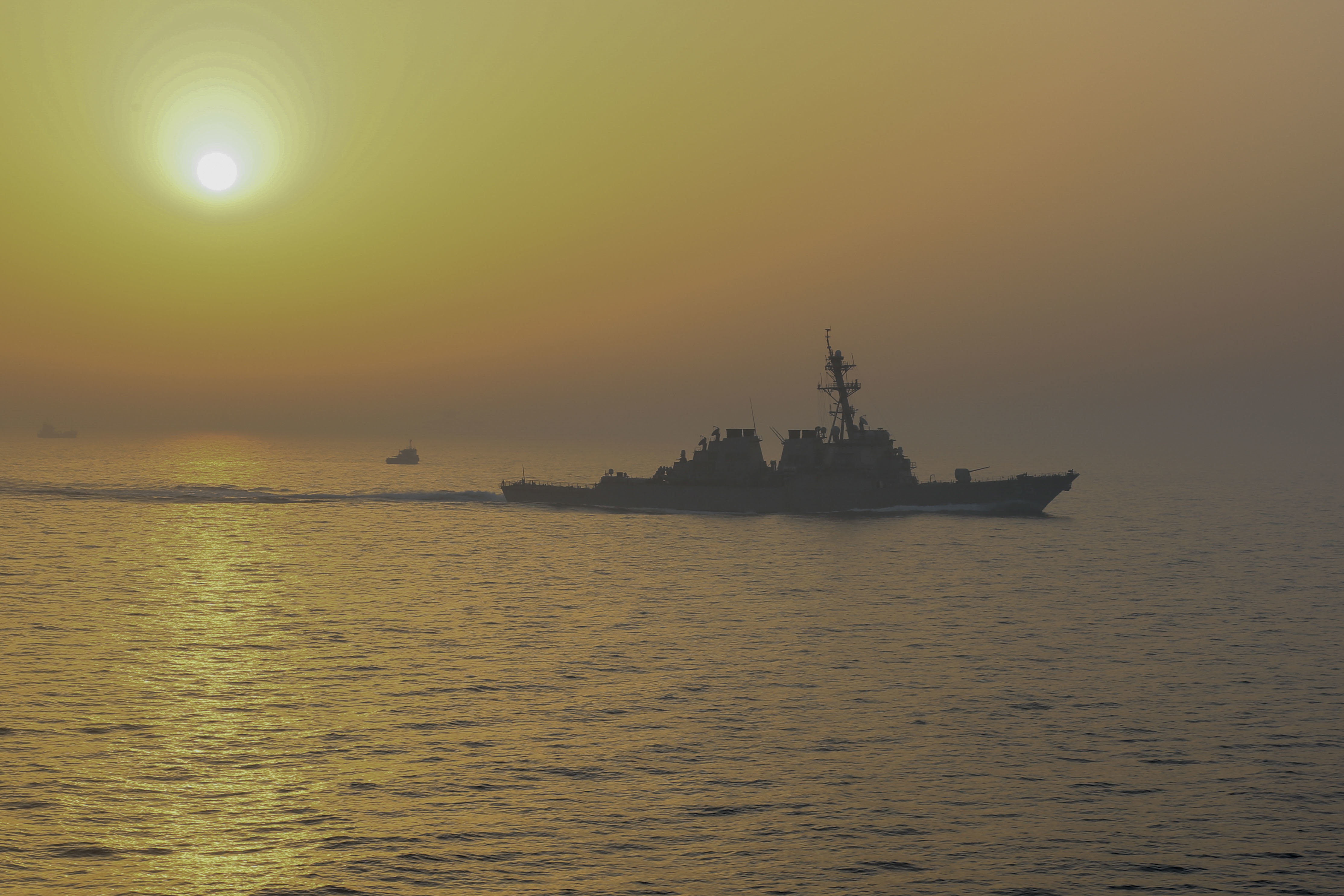
Donald Trump arrived in Evian-les-Bains on Monday for the G7 summit, where European leaders announced plans to help reopen the Strait of Hormuz [1].
This coordination follows a U.S.-Iran agreement announced on June 14 that ended a 106-day war [2]. The reopening of the strait is critical for global energy markets, as 20% of the world's oil transited the waterway before the conflict [3].
French President Emmanuel Macron and Italian Prime Minister Giorgia Meloni signaled their readiness to provide military and diplomatic support for the maritime operation. Macron said, "Siamo pronti a sostenere la missione per riaprire lo Stretto di Hormuz" [4].
Meloni said that Italy is "pronti a fare la nostra parte su Hormuz" [5]. The G7 summit, held on the shores of Lake Geneva, serves as the primary venue for these leaders to synchronize the logistics of the upcoming mission.
Trump confirmed the timeline for the operation during the proceedings. "Venerdì riapre Hormuz," Trump said [6]. The mission to reopen the strait is planned for Friday, June 21, 2026 [7].
The agreement between the U.S. and Iran created a diplomatic window for European powers to intervene and restore the flow of oil. The G7 agenda also includes discussions on the conflict in Ukraine, and the role of artificial intelligence, though the immediate priority remains the stability of the Hormuz waterway [8].
Leaders are expected to continue negotiations through June 17 to ensure the security of the mission, and the long-term adherence of both the U.S. and Iran to the peace terms [1].
“"Venerdì riapre Hormuz"”
The rapid transition from a 106-day conflict to a coordinated G7 maritime mission suggests a high-priority effort to prevent a global energy crisis. By involving European leaders in the reopening of the Strait of Hormuz, the U.S. is internationalizing the security guarantee of the waterway, potentially creating a broader multilateral framework to maintain stability in the region beyond the bilateral US-Iran agreement.


