
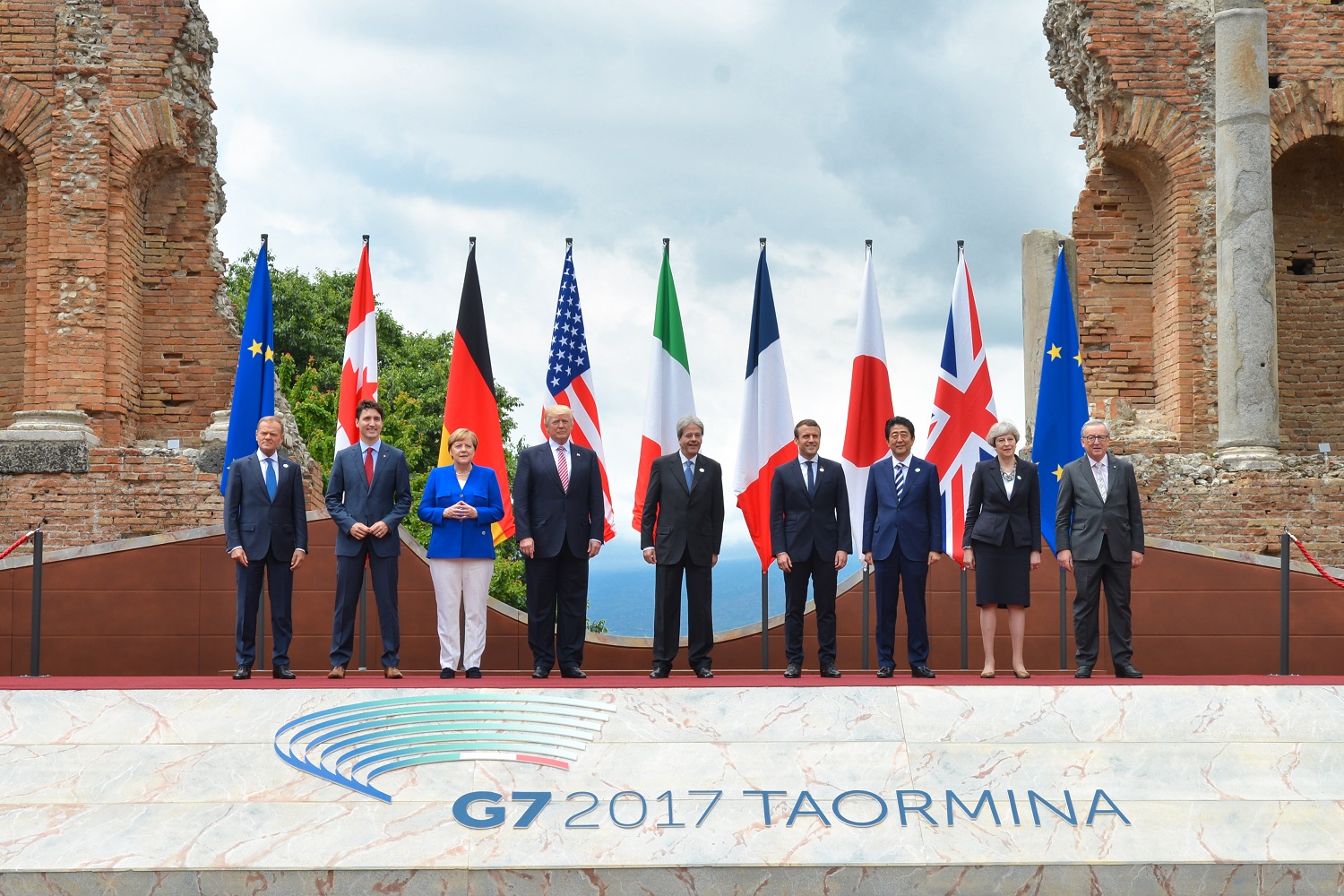
President Donald Trump and French President Emmanuel Macron met Monday at the G7 summit to discuss geopolitical differences and trade disputes [1].
The meeting comes as the U.S. and Europe face deepening friction over the Iran war and the conflict in Ukraine. The outcome of these talks could determine whether the two nations move toward diplomatic cooperation or further economic escalation.
The leaders convened at a lakeside resort in the French Alps [2]. Central to the tension is a proposal from the Trump administration to impose a 200% tariff on French wines [3]. This economic pressure coincides with broader disagreements over how the G7 should handle global security threats.
Macron has attempted to balance diplomatic cordiality with a firm stance on European sovereignty. He previously invited President Trump to a dinner at the Palace of Versailles following the summit [4]. However, the French leader remained resolute regarding external pressure on European policy.
"Europe would not give in to bullies or be intimidated," Macron said [5].
The discussions focused on the Iran war and the ongoing situation in Ukraine [1]. Both leaders are seeking ways to align their strategies, though the threat of high tariffs remains a significant point of contention between the two allies.
While Macron has extended gestures of hospitality, the underlying relationship remains strained by the U.S. approach to trade. The 200% tariff threat serves as a primary lever in the current negotiations [3].
“"Europe would not give in to bullies or be intimidated."”
The contrast between Macron's invitation to Versailles and the U.S. threat of massive tariffs illustrates a volatile diplomatic strategy. By combining high-level social diplomacy with aggressive economic protectionism, the Trump administration is attempting to force concessions from European allies on security and trade issues.

'%2F%3E%0A%20%20%20%20%3Crect%20width%3D'1600'%20height%3D'900'%20fill%3D'url(%23v)'%2F%3E%0A%20%20%20%20%3Cg%20opacity%3D'0.08'%20fill%3D'%23ffffff'%3E%0A%20%20%20%20%20%20%3Ccircle%20cx%3D'1420'%20cy%3D'180'%20r%3D'220'%2F%3E%0A%20%20%20%20%20%20%3Ccircle%20cx%3D'1500'%20cy%3D'760'%20r%3D'120'%2F%3E%0A%20%20%20%20%3C%2Fg%3E%0A%20%20%20%20%3Cline%20x1%3D'80'%20y1%3D'172'%20x2%3D'220'%20y2%3D'172'%20stroke%3D'%23ffffff'%20stroke-width%3D'3'%20stroke-opacity%3D'0.6'%2F%3E%0A%20%20%20%20%3Ctext%20x%3D'80'%20y%3D'140'%20font-family%3D'Inter%2C%20-apple-system%2C%20Helvetica%2C%20sans-serif'%20font-weight%3D'700'%20font-size%3D'28'%20fill%3D'%23ffffff'%20letter-spacing%3D'6'%3EHANNA%20%C2%B7%20NEWS%3C%2Ftext%3E%0A%20%20%20%20%3Ctext%20x%3D'80'%20y%3D'230'%20font-family%3D'Inter%2C%20-apple-system%2C%20Helvetica%2C%20sans-serif'%20font-weight%3D'600'%20font-size%3D'40'%20fill%3D'%23ffffffb3'%20letter-spacing%3D'4'%3EWORLD%3C%2Ftext%3E%0A%20%20%20%20%3Ctext%20x%3D'80'%20y%3D'622'%20font-family%3D'Playfair%20Display%2C%20Georgia%2C%20serif'%20font-weight%3D'800'%20font-size%3D'86'%20fill%3D'%23ffffff'%20letter-spacing%3D'-1'%3EEngland%20Squad%20Prepares%20in%20US%3C%2Ftext%3E%3Ctext%20x%3D'80'%20y%3D'721'%20font-family%3D'Playfair%20Display%2C%20Georgia%2C%20serif'%20font-weight%3D'800'%20font-size%3D'86'%20fill%3D'%23ffffff'%20letter-spacing%3D'-1'%3Efor%20World%20Cup%20Opener%20Against%3C%2Ftext%3E%3Ctext%20x%3D'80'%20y%3D'820'%20font-family%3D'Playfair%20Display%2C%20Georgia%2C%20serif'%20font-weight%3D'800'%20font-size%3D'86'%20fill%3D'%23ffffff'%20letter-spacing%3D'-1'%3ECroatia%3C%2Ftext%3E%0A%20%20%20%20%3Ctext%20x%3D'80'%20y%3D'870'%20font-family%3D'Inter%2C%20-apple-system%2C%20Helvetica%2C%20sans-serif'%20font-weight%3D'500'%20font-size%3D'22'%20fill%3D'%23ffffff66'%20letter-spacing%3D'2'%3Enews.hanna-ai.com%3C%2Ftext%3E%0A%20%20%3C%2Fsvg%3E)