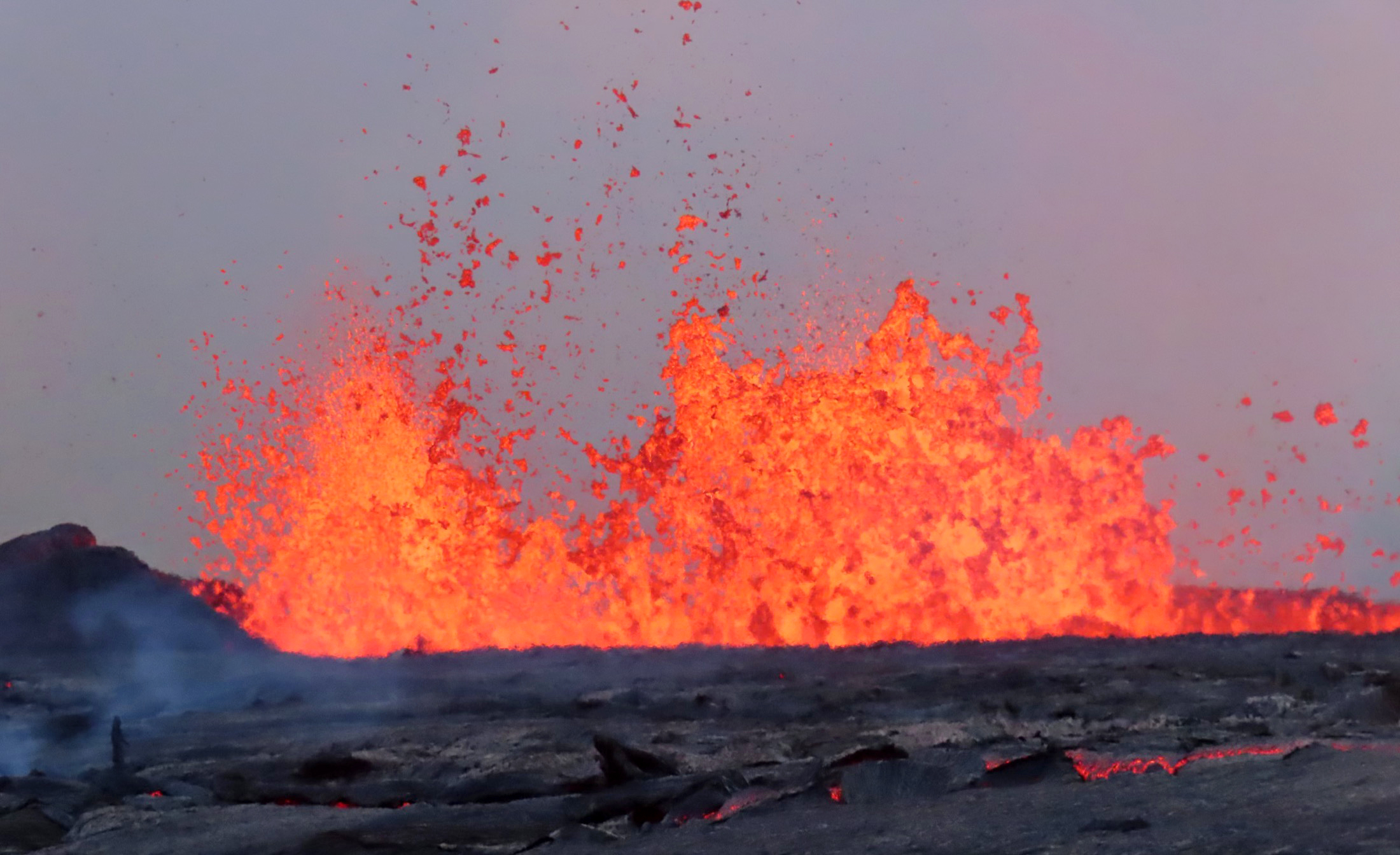
A lava fountain reaching approximately 500 feet erupted from the Kilauea volcano on Hawaii's Big Island on Tuesday, July 28 [1].
This event marks a significant peak in the volcano's current activity cycle, demonstrating the sustained power of the eruption and the periodic nature of its lava-fountaining episodes.
The activity occurred within the Halemaʻumaʻu crater [2]. The fountain, which reached roughly 150 meters in height [1], was captured by observers and cameras as it illuminated the sky under a full moon [1].
Reports said the event began between 7:10 p.m. and 7:30 p.m. local time [1, 3]. This specific event is identified as episode 52 of the ongoing eruption sequence [1].
The current eruptive phase of Kilauea began in December 2024 [4]. Since that time, the volcano has periodically produced these towering fountains of molten rock. This latest episode has set a record for the number of lava-fountaining episodes occurring within a single eruption for this volcano [5].
Geological monitors continue to track the summit's behavior. The interplay of the full moon and the glowing lava provided a rare visual spectacle for those monitoring the Halemaʻumaʻu crater from a distance [1, 2].
“A lava fountain reaching approximately 500 feet erupted from the Kilauea volcano.”
The record-breaking frequency of these fountaining episodes suggests a highly active and sustained magma supply beneath the Halemaʻumaʻu crater. While Kilauea is known for its periodic activity, the progression to 52 distinct episodes since late 2024 indicates a prolonged period of instability that provides scientists with critical data on magma movement and pressure release in shield volcanoes.