U.S. President Donald Trump said the United States would "bomb the hell out of" Iran if Tehran violates the interim Iran agreement [1, 2, 3].
The statement signals a willingness to return to direct military conflict to ensure compliance with diplomatic frameworks. This approach emphasizes kinetic force over legal or diplomatic arbitration as the primary deterrent against Iranian non-compliance.
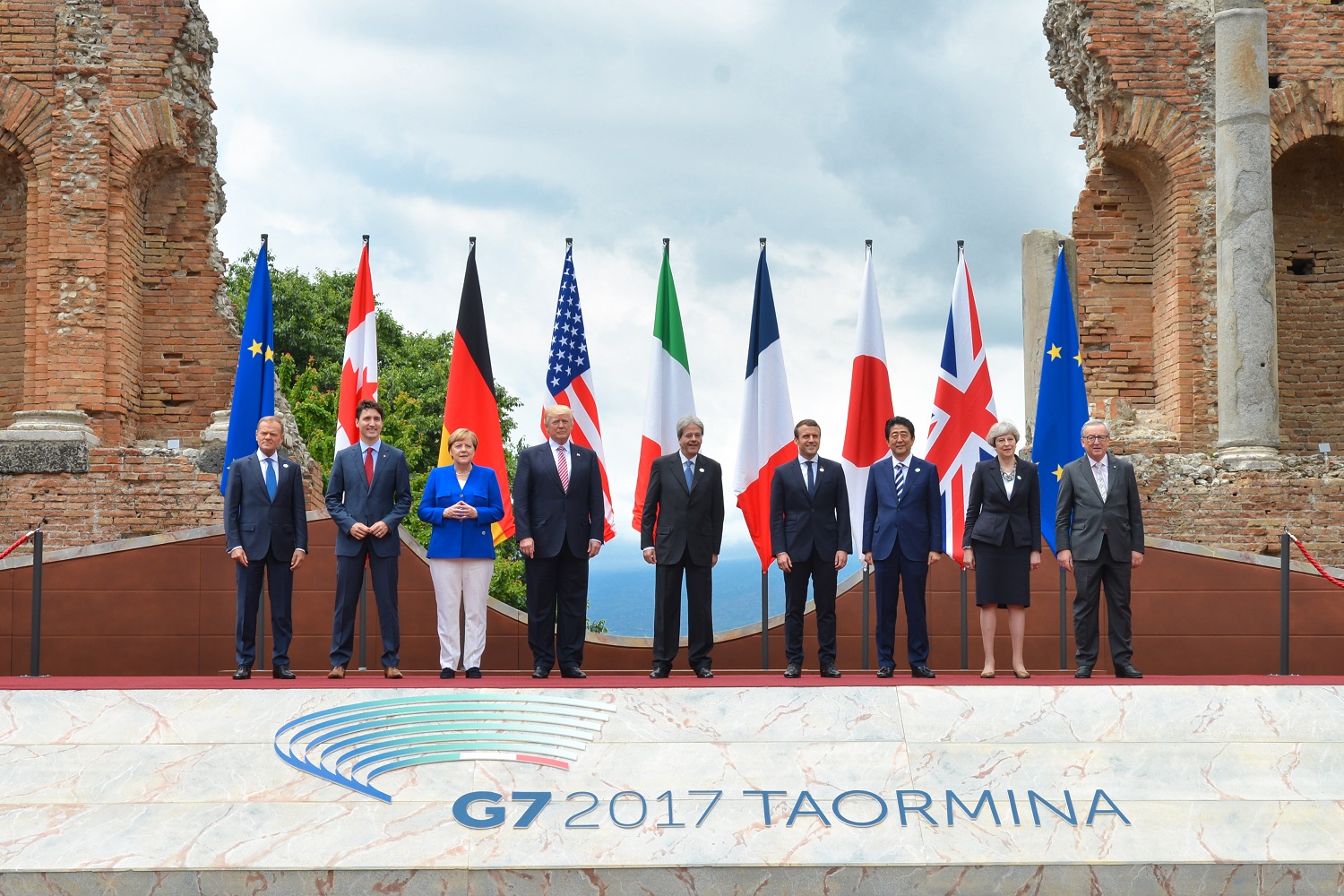
Speaking on the final day of the G7 summit in Italy in June 2024, Trump said military strikes are the only viable enforcement tool for the agreement [1]. He questioned the efficacy of traditional legal responses in the face of treaty violations.
"What else am I going to do? Am I going to say, ‘I'm going to take you to court?’ You know, we're going to bomb the hell out of them if they violate the agreement," Trump said [2].
The President said that the U.S. maintains the option to revert to aerial campaigns if the terms of the agreement are not met to his satisfaction [1]. This stance positions the U.S. military as the guarantor of the deal's integrity, a shift from the multilateral sanctions-based approach often favored by other G7 members.
Trump said that the U.S. would warn Tehran with new strikes should the deal be breached [3]. He said, "We could go back to dropping bombs if we don't like the agreement" [1].
These comments come as the administration navigates the complexities of the interim agreement, balancing the potential for sanctions relief against the need for strict verification of Iranian activities [3].
“"We're going to bomb the hell out of them if they violate the agreement."”
This rhetoric indicates a policy of 'maximum pressure' integrated into the interim agreement's framework. By explicitly linking treaty violations to immediate military retaliation rather than judicial or diplomatic processes, the U.S. is attempting to establish a high-cost deterrent to prevent Iran from advancing its nuclear or missile capabilities.